How to pack skincare in checked luggage so nothing leaks is mostly about three cheap things: tape, zip bags, and knowing which side of the 100ml rule each bottle sits on. Get those right and the haul you carried out of Seoul arrives home looking like it did on the shop shelf.
I'm Clara, I've flown home from Seoul to Singapore five times with a suitcase full of bottles, and I've unpacked both the good version and the bad one. This post is the routine I use now, the night before the flight.
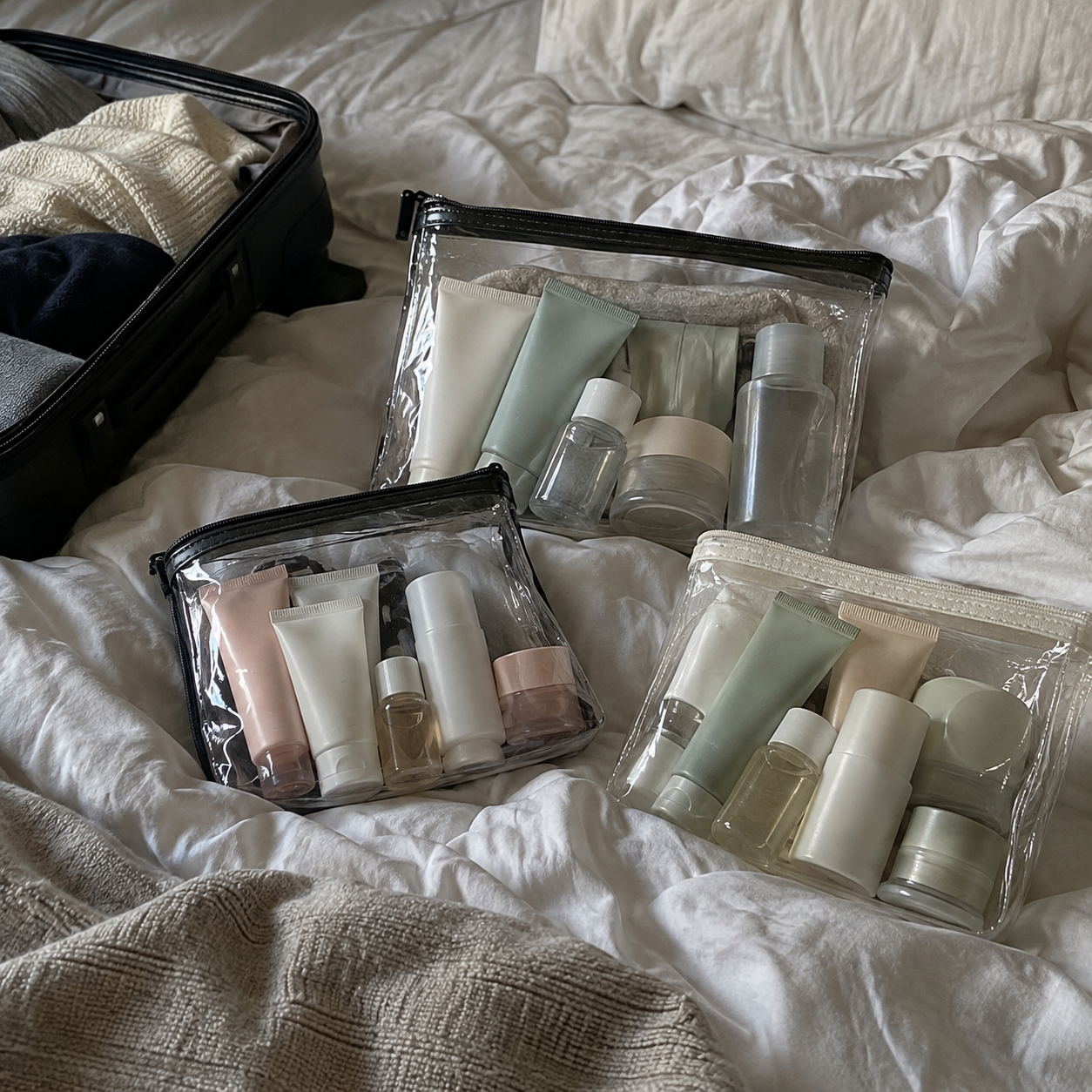
Note: no product names and no prices here. This is about getting bottles home intact, not about what's in them.
First, Sort: What Goes in the Cabin and What Goes in the Hold
Start here, because it decides everything else.
At Incheon, liquids in your carry-on have to be in containers of 100ml or less, and the airport is clear that it's the size of the CONTAINER that counts, not how much is left inside. A 150ml toner that's half used still doesn't go in the cabin. All the small ones go into one transparent 1L zip bag, one bag per person.
The airport lists toner, lotion, perfume, shampoo, toothpaste, sunscreen and lip gloss as the sort of thing this covers. So basically your whole haul.
Checked baggage is different. The airport's guidance says there's no volume limit on liquids in the hold. Sprays are the exception: personal hygiene sprays like hair spray go in at up to 2kg (2L) in total, with a 500ml cap per item. (The US FAA has the same 2kg / 500ml numbers for toiletries in checked bags, and it wants the spray button protected by a cap so it can't go off.)
So my sort, on the bed, the night before:
- Cabin: the zip bag of things I'll use on the plane or the next morning, all under 100ml. Plus anything flat and dry, like sheet masks.
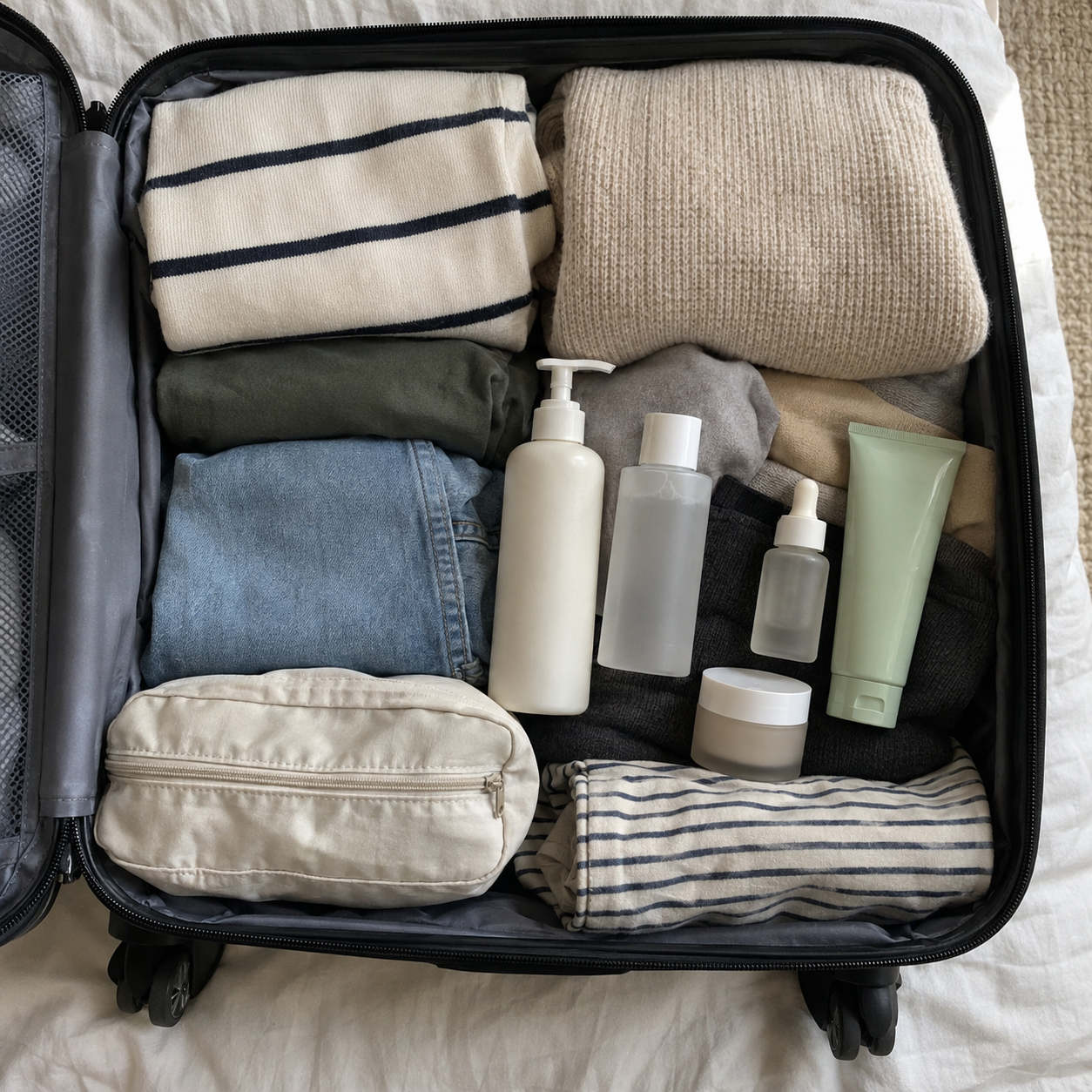
- Hold: every full-size bottle, every jar, every tube over 100ml, and anything I bought in the last two days and haven't opened.
- Neither: anything I'm not sure about, which gets read properly (the back of the box, not the front) before it goes anywhere.
Honestly, most of the haul ends up in the hold. That's fine, as long as it's packed for it.
Why Bottles Leak on a Plane
It's not the baggage handlers. Well, not only.
A sealed bottle holds a little pocket of air at whatever pressure it was filled or last closed at, which for you is ground level in Seoul. Once you're up, the pressure around the bottle drops. Passenger cabins are kept pressurised to no more than the equivalent of about 8,000 feet in normal flight, so even in the cabin the air outside the bottle is thinner than the air inside it. The trapped air pushes outwards, and it finds the weakest point: a pump that isn't locked, a flip cap, a tube's thin shoulder, a lid that was screwed on a quarter turn short.
That's why the fix is mostly about sealing the openings, not about padding.
Pro Tip: before you close any bottle that's partly used, give it a gentle squeeze to push some of the air out, then cap it. Less air inside, less to push.
Seal the Openings: Tape, Then Cling Film, Then the Cap
This is the step that actually matters, so take your time with it.
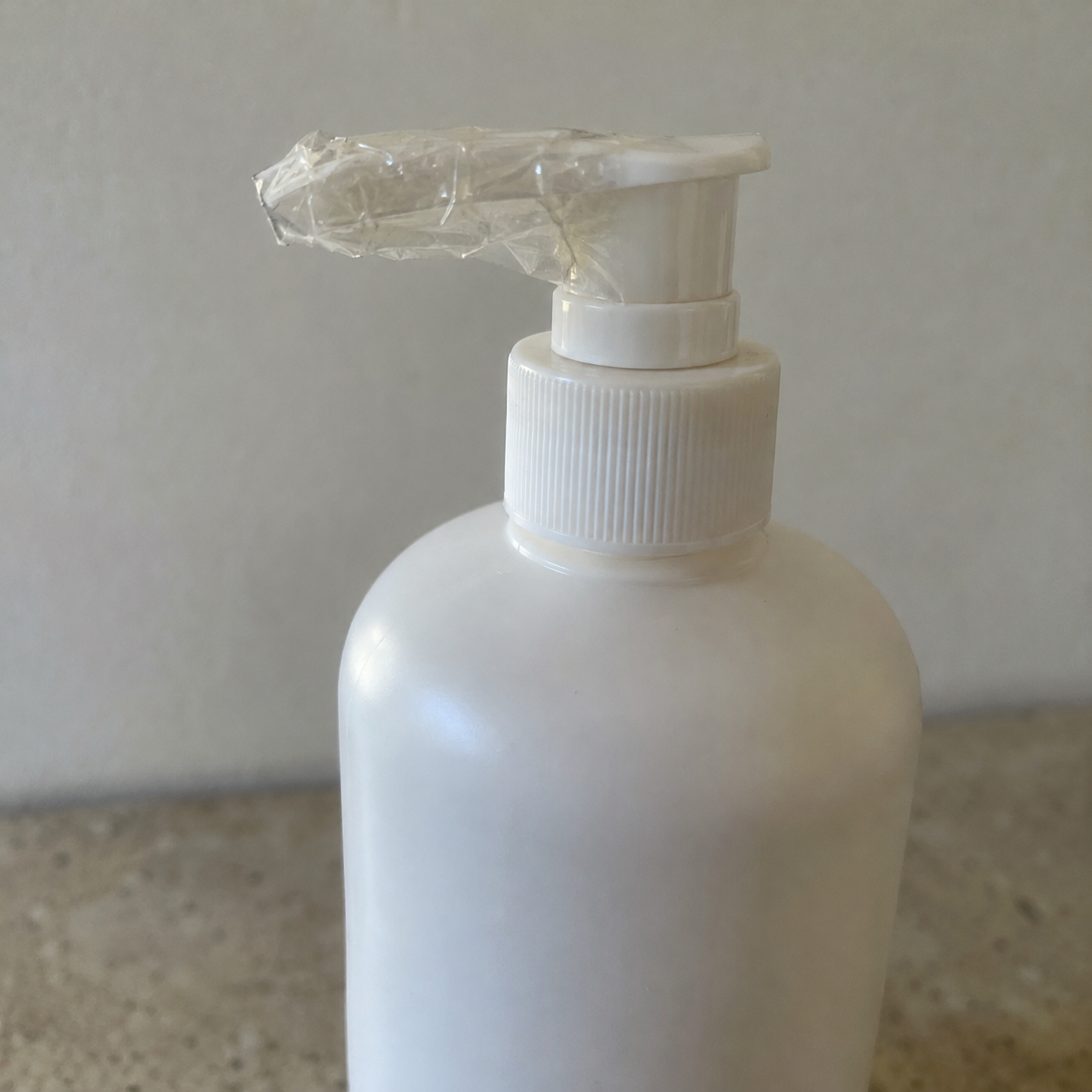
Pumps. Lock it if it locks (most twist into a down position). Then wrap a strip of tape round the neck where the pump meets the bottle, and another over the nozzle. Even a locked pump can get pressed if the bag gets squashed.
Screw caps. Unscrew, lay a small square of cling film over the opening, screw the cap back on over it. Then tape across the join.
Flip caps and tubes. Tape the lid shut across the hinge. For tubes, I also tape round the shoulder, because that's where mine have split before.
Droppers. Treat like a screw cap, cling film under the lid. Droppers are the worst for creeping out, in my experience.
Any tape works. Masking tape is my choice, because it peels off clean and I can write on it, which is the same tape I use at home for opening dates.
Bag It Twice
Once everything is sealed, it goes into zip bags. Two layers, not one.
- Inner bag: group by type. Cleansers and oils together, toners and essences together, creams and jars together. If one leaks, it only ruins its neighbours, and oil and water leaks stay apart.
- Outer bag: a bigger zip bag around two or three of the inner ones. Squeeze the air out before you close it.
Note: oils go in their own inner bag, every time. An oil leak is the one that never washes out of clothes properly. Long story short, I learned that the expensive way.
On an earlier trip I packed a cleansing oil in the hold with the pump unlocked and no tape, right on top of a sweater, because I was tired and it was late. Everything looked fine from the outside. Then I unzipped the case. The pump had been pressed flat somewhere in transit, the sweater had soaked up most of it, and the lining of the suitcase smelt of that oil for a week after I'd washed everything. The bottle itself was perfectly fine, which somehow made it worse.
Glass, Jars and Ampoules
Glass is where padding finally matters.
- Wrap each glass bottle on its own. A sock or a T-shirt works. Two glass bottles touching is how you get a crack.
- Put glass in the middle of the case. Not against the shell, not near the wheels, not in an outside pocket. Clothes on all sides.
- Keep the boxes if you have room. For glass, the original box is free padding. (For everything else I bin the box to save space, but glass earns it.)
- Jars upright if you can. A jar with a wide lid on its side has a lot of seal to fail.
Sheet masks are the easy one. They're flat, sealed and light, so they go flat against the back panel of the case or in the cabin bag.
I already said this about gifts, but it's true of my own stuff too: anything liquid and full-size goes in the hold, and the cabin gets the flat, dry things. I wrote that list out properly in my gifts post.
Duty-Free Liquids at the Airport
If you buy liquids after security at Incheon, they come in a sealed bag, and the airport says duty-free liquids can only be carried on board in that "Duty Free Liquid Item Bag".
The international guidance behind these bags expects the receipt to sit inside the bag where it can be seen. So: don't open it, don't take the receipt out to check something, don't decide to repack it on the plane.
Note: if you're connecting through another country, the rules there can be different, and the airport warns that liquids can be taken off you on transfer. Ask your airline before you buy. I fly straight home, so this has never come up for me, which is exactly why I'd ask rather than guess.
The Last Two Checks
Your own country decides what you can bring home and how much before it counts as more than personal use. That varies a lot, so check your own customs site before the trip, not at the arrival hall.
And weigh the case. A full skincare haul is heavier than it looks.
I read a handful of Korea travel blogs before each trip (PrettyKeep Korea is one I've been reading lately), and the packing part is always the bit I wish was longer, which is partly why this post exists.
Night-Before Checklist
- Sort into cabin (under 100ml, one 1L bag), hold, and "read the box first"
- Squeeze air out of partly used bottles
- Lock pumps, then tape the neck and nozzle
- Cling film under screw caps and droppers
- Tape flip caps and tube shoulders
- Inner zip bags by type, oils on their own
- One outer bag, air pressed out
- Glass wrapped one by one, in the middle of the case
- Sprays capped, and under the 2kg / 500ml line
- Duty-free bag left sealed, receipt inside
- Customs rules for home checked, case weighed
If you're doing your last morning in town before a night flight, do all of this in the hotel before checkout, not on a cafe floor. I went through how I plan that morning in my last-morning post.
Let me know in the comments if anything has ever leaked on you, and what it was. I suspect cleansing oil is winning.
Next up, I'm planning to write about the other direction: the small travel kit I fly OUT with, so there's actually room in the case for the haul on the way back.